26 February 2010

simplicity


Needing inspiration in the face of limited produce and a pantry of dry goods that require time and care, I opened Mastering the Art of French Cooking (vol. I) and browsed the potato section. I came across the "Gratin de pommes de terre aux anchois." I had potatoes (some local Kennebecs), anchovies, eggs and cream. A friend brought over a some cheese for finishing. Julia Child dices the potatoes and minced the onions, I sliced them both thin and used more onions. I parboiled the potatoes, layered them with onions and a few anchovies, poured a ½ pint of cream with a yolk, salt and pepper over everything. Garnish with shredded hard cheese and some of the oil from the anchovies. Bake until boiling around the edges and browning on top.

This was a great dinner with some local greens & vinaigrette and lentils braised with red onion.

12 February 2010

braising oxtail


This is my second attempt at making oxtail. Last time I braised the oxtail with brussels sprouts and turnips. Here, I go to Jennifer McLagan's recipe in her sublime book Fat: An Appreciation of a Misunderstood Ingredient. First, the oxtail are seared in suet.


A mirepoix mix is sautéed in the fat, wine is used to deglaze, bay, star anise and garlic is added, and then it is covered in stock (I used a mix of lamb and beef stocks) and let to braise slowly in the oven. I also added some marrow bones and allspice berries. The meat is then taken out of the broth to cool.


Once cooled, a rich fat can be taken off the unctuously gelatinous stock.


After a second braise in the oven.


Served with suet dumplings poached in lamb stock. Incredible.

25 December 2009

Christmas Pudding.


Christmas Pudding. Here I start with two cups of raisins soaked in brandy, some shredded carrots and breadcrumbs (from a cranberry-sunflower loaf, to be exact). I followed that recipe but added four ground cloves and used candied lemon, orange and quince. Greased the pan bith butter but used suet as the fat for the pudding.


Here it is, a full recipe's worth in a 1.2L pudding tin.


Cover with wax paper, steam in a covered pot, partially filled with water, for 4½ hours at 450ºF.


Age for a few days, weeks, months. (This aged 2 weeks). Cover, re-steam for an hour.


Serve with hard sauce (butter, sugar, brandy).


Chilled hard sauce.


Finish with flaming brandy. This is my new favorite dessert. Moist, rich with flavor, and served with hard sauce, it is perfect.

10 December 2009

gigot rôti


Leg of lamb from Crabapple farm, seasoned and stuffed with garlic slices per Julia Child's suggestion.


Basting with butter and suet.


In the oven: 450º(F) until seared (≈20 mins), then at 350º until 150º.


Radicchio and endives, seared.


The gigot.


Carving.


(This meat was beautiful.)


(ditto.)


Voilà.


Lamb (background). Radicchio/endive (foreground).

28 November 2009

membrillo


With the leftover pulp from my quince gelée, I decided to make quince paste, a/k/a membrillo or cotignac d'Orléans. I passed the quince through a food mill, first coarse, then fine.


I added an equal weight of sugar, per Jane Grigson. This I cooked until "you will barely be able to push the spoon through the paste."


I spread this in a Pyrex 9x13 dish, 1cm thick, as Grigson suggests. Then, after those hours of cooking, comes hours of drying. Over eight hours, flipped thrice, at 170ºF, the membrillo dried.


And now it is packed in sugar, between parchment. All I need is Manchego!

in praise of asafoetida


Just submitted the first two — of six — grad applications. Short of breath (from stress, not asthma). Needed to reward myself. And thus, a River Rock Farm shoulder steak. And pommes Anna. And yes, brussels sprouts sautéed in duck fat with almonds and asafoetida. As asafoetida is probably a relative of the once oft-used siliphim, I've been convinced that asafoetida being limited to Indian cooking is a tragedy. (It is amazing with de Puy style lentils.) Offering a hint of garlic and leeks, it makes everything better. Especially brussels sprouts with almonds in duck fat. Moreover, this appropriately reflects (and builds upon) my last meal as a serious baker; the steak is emotional, but asafoetida has been used to treat asthma and bronchitis, the chronic conditions that have been caused by me baking.

grapefruit-hibiscus marmalade


Take six grapefruit. Remove the outer peels, leaving behind the pith.


Julienne the rind. This sounds arduous, but it's worth it. And less work that one might expect.

Take off the rest of the rind. Section the grapefruit, making sure to save the pith and seeds for the pectin bag. Do the same with one lemon. Measure the fruit. (I had two pounds). Tie the membranes and seeds in cheesecloth.


Cook the fruit, with the pectin bag and peels on top, for twenty minutes. (Add a splash of water if needed.) Then add an equal weight of the fruit (before rind) in sugar to the pot.


Add one half-cup of dried hibiscus flowers.


Cook on medium-high until it starts to thicken. Remove the pectin bag.


Squeeze out the thick pectin-filled goo — or press well in a conical strainer (less of a chance of burning yourself). Add that to the marmalade and cook until about 8º above boiling (220º unless you're at a high elevation).


And/or test by dropping onto a plate that has been in the freezer.


Place in sterilized jars. Process in a hot-water bath for 5 minutes.


And here it is. It's bracing, perfect for breakfast toast. My favorite marmalade yet.

quince preserves


Been on an obvious quince kick lately. And when it comes to fruit, I Jane Grigson's Fruit Book never lets me down. She suggests a quince jelly where one chops the less handsome fruit into small pieces and reserves the nicer quince for slicing.


This pot (above) is filled with chopped whole quinces, then the cores and skins of the nice quinces, and then finished with the elegant quince slices. I also added four star anise, a few allspice berries, a sliced lemon and a half vanilla pod.


Once poached and soft, they are removed.


The rest comes to a hard boil and is mashed up. Once very soft, it gets passed through jelly cloth. I used a food mill and then a conical strainer to extract more, giving a more jamlike texture.


That gets cooked with the sliced quince and 2¼ cups of sugar for each 2 cups of liquid (before adding the slices).


Cook until it jells when placed on a cold plate. This happened around 220º, similar to a marmalade.


I processed these in a hot water bath for six minutes (always use Putting Food By as a reference). Nice texture, softer than membrillo, but more coarse than jelly. Very good. And star anise was a good idea. It's subtle, but highlights the quince flavor.

27 November 2009

thanksgiving custards

Another version of these custards.

Process 1¼ cups of raw cashews with a ½ teaspoon of agar agar and a pinch of salt. Add a ¼ star anise, 4 allspice berries, a ½ teaspoon szechuan peppercorns and two cloves cloves that have been finely ground, as well as a ½ teaspoon of mace. Process until a paste.

Add 2¼ cups of boiling water, process. Add 3 cups of roasted squash (this was pumpkin and butternut, well roasted, puréed and then passed through a food mill) and purée well. Add a ½ cup of brown sugar and a ½ teaspoon each of vanilla and almond extract. Sieve, if necessary. Pour into custard cups, ramekins, etc. This made about 9 5 oz. servings.

Top with candied, chopped pecans (I just cooked pecans with brown sugar, Lyle's golden syrup, some oil and some salt).

pear-quince-apple pie


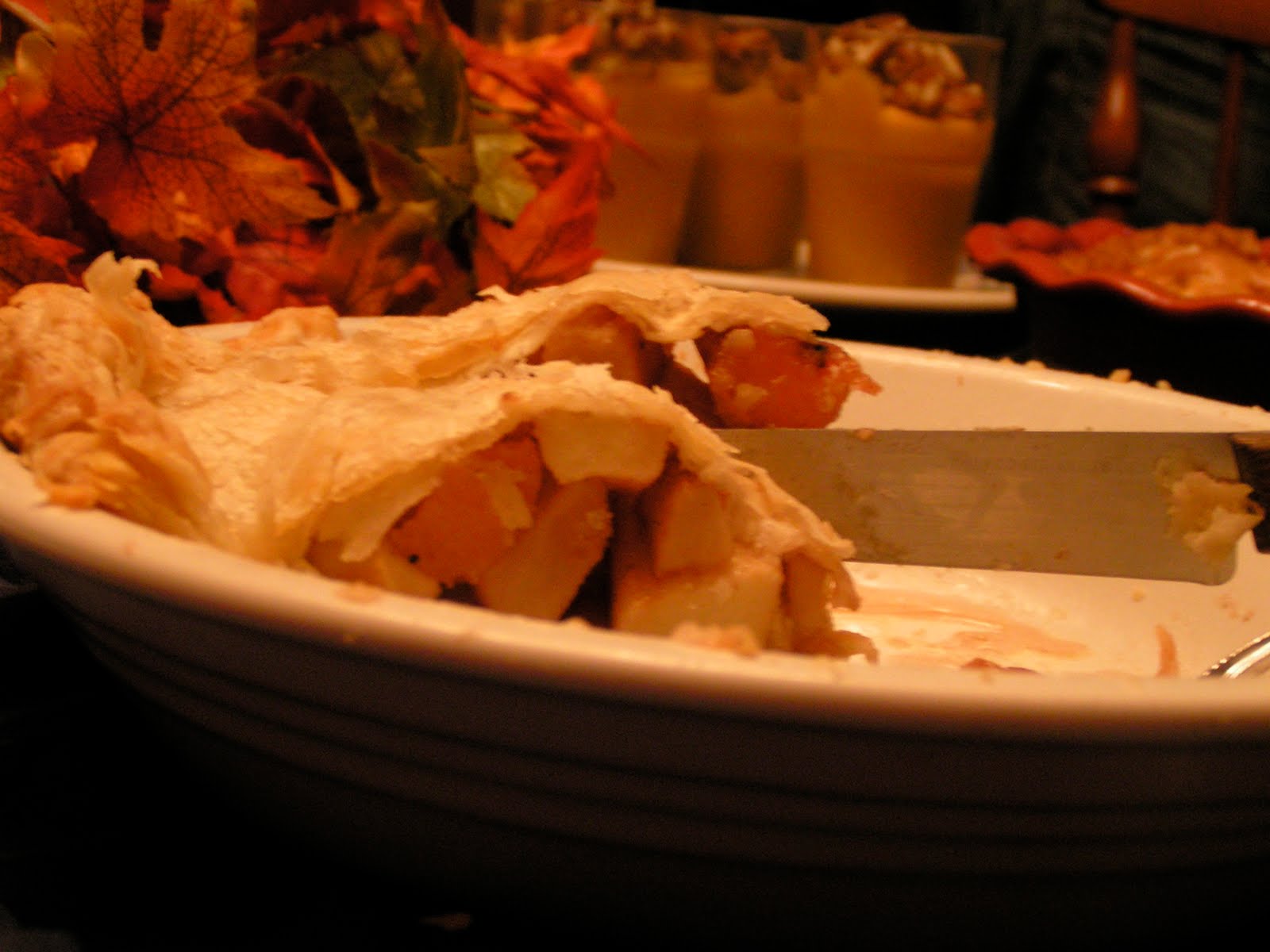
Poached quinces. Apples (two varieties, whose names I forget, but both hardy, heirloom baking ones). Bosc pears. And an all-butter crust.